
4 Reasons You Hate Universal Audio
Do you hate Universal Audio?
Have they annoyed you?
Are Apollo interfaces too expensive?
Is DSP irrelevant in 2024?
If you answered yes to any of these questions, then I hear you! Let’s unpack some of the most common frustrations people have with Universal Audio (UA). Whilst one can understand where some of these issues come from, there are a few misconceptions worth clearing up. Let me show you why the Apollo interfaces might be a better investment than you think.
1. There’s No Audible Difference in Sound
One frequent complaint is, “I can’t hear the difference between an Apollo and something like a Focusrite Scarlett or Audient iD14.”And you know what? That’s fair. Not everyone’s ears pick up on subtle differences straight away.
But here’s the thing: while the sonic difference might seem small on a single track, the real benefit comes throughout a full session. When you’ve got 30, 40, or 50 tracks recorded with an Apollo, the clarity and depth really start to shine through.
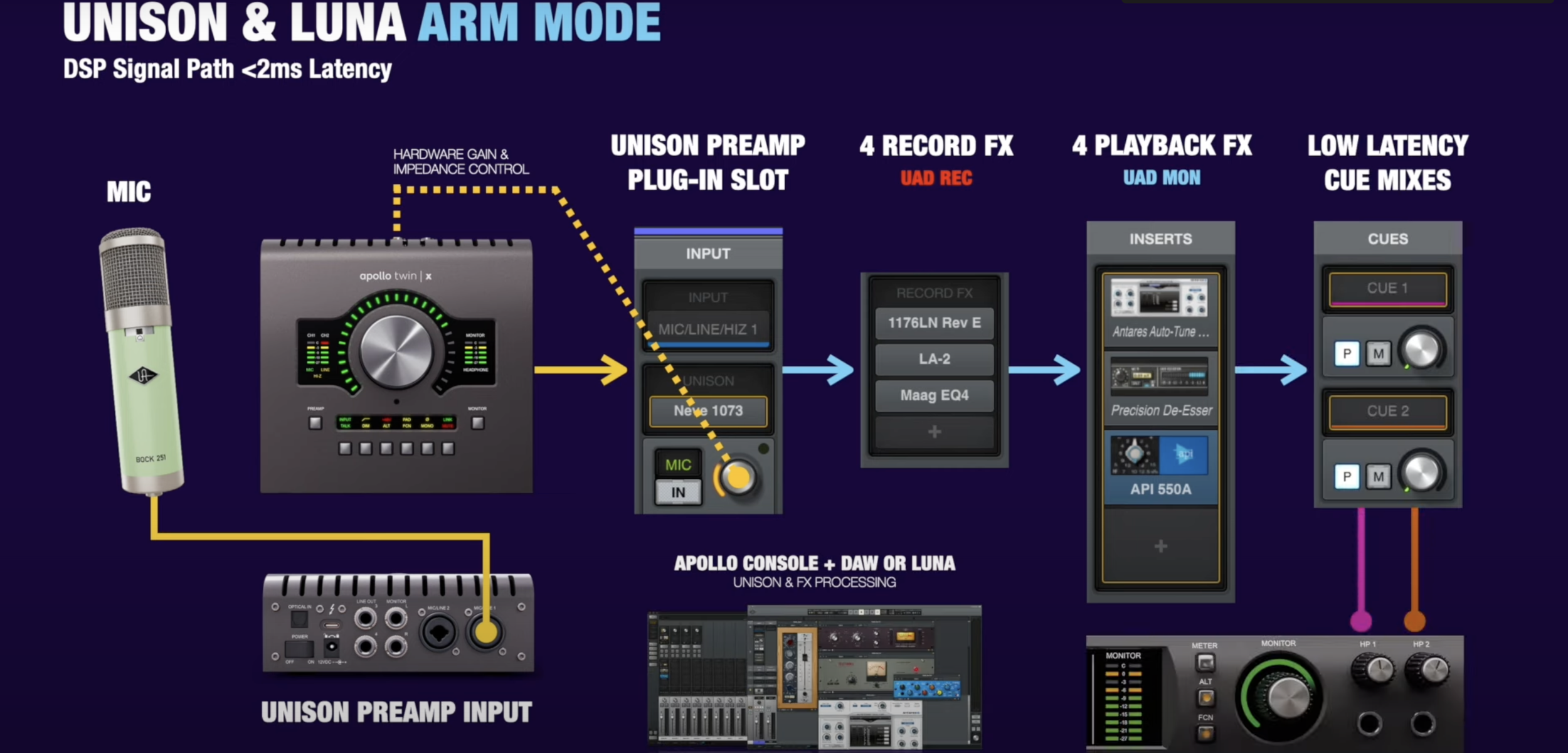
What sets the Apollo apart is its Unison preamp technology. This integrates software and hardware to physically reconfigure the preamps, emulating classic gear like Neve 1073s, API 512s, and more. With an Apollo X8p, for example, you can record eight channels of Neve preamps. Want more? Daisy-chain multiple units, and you’ve got a full Neve console at a fraction of the price.
So yes, Apollo interfaces are pricey. But when you consider the tech packed into these devices, the long-term value is hard to ignore.
2. You Don’t Understand Console
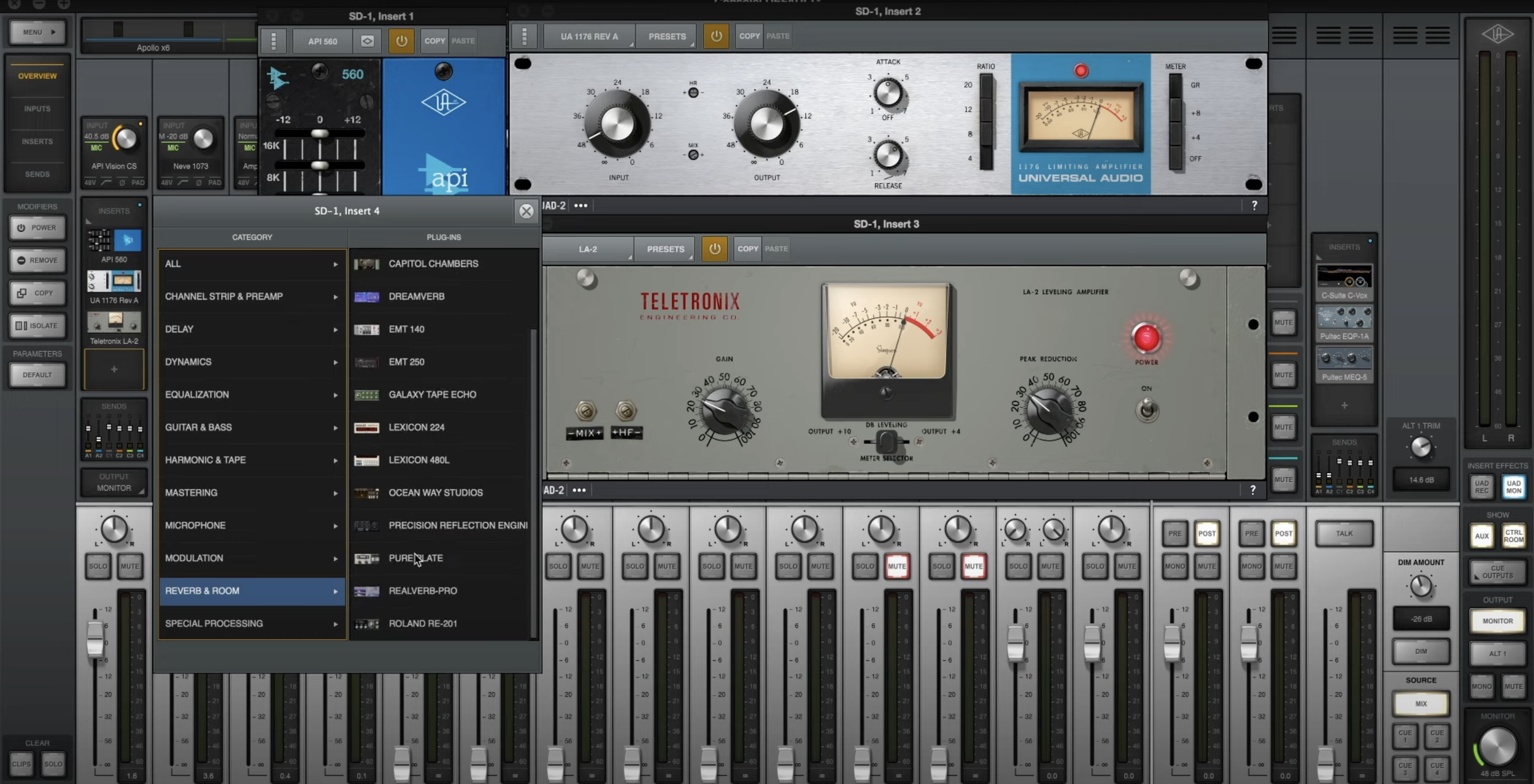
Let’s talk about Console, Universal Audio’s routing and monitoring software. A lot of people find it confusing at first, if you’re coming from simpler setups, it can feel overwhelming. But Console isn’t here to complicate your life—it’s here to make it better.
Here’s the key:
• Turn off software/input monitoring in your DAW.
• Use Console for monitoring instead.
Once you do that, you’ll get sub-2ms latency, letting you monitor your tracks in real time with no delay. Console also lets you process input audio in real time with EQs, compressors, reverbs, or amp sims. You can either use these effects for monitoring or print them directly into your recording.
I know it takes a bit of time to learn, but trust me—once you’ve got the hang of Console, it’s a game-changer for your workflow.
3. DSP Is Irrelevant in 2024
Let’s address the elephant in the room: “Isn’t DSP irrelevant now that computers are so powerful?” It’s a fair question.
Yes, Apple Silicon and other modern CPUs are incredibly powerful. But UA’s DSP still plays a vital role for two reasons:
Unison Technology and Real-Time Monitoring – This relies entirely on Apollo’s onboard DSP. Native plugins can’t replicate this functionality.
Offloading CPU Tasks – Even the most powerful computers can hit their limits with CPU-intensive plugins like Ozone 11. By offloading UA plugin processing to the Apollo, you free up your computer’s resources for other tasks.
While computers are getting faster, plugins are also getting more complex. If you’re running large sessions, being able to offload processing to your Apollo is a huge advantage.
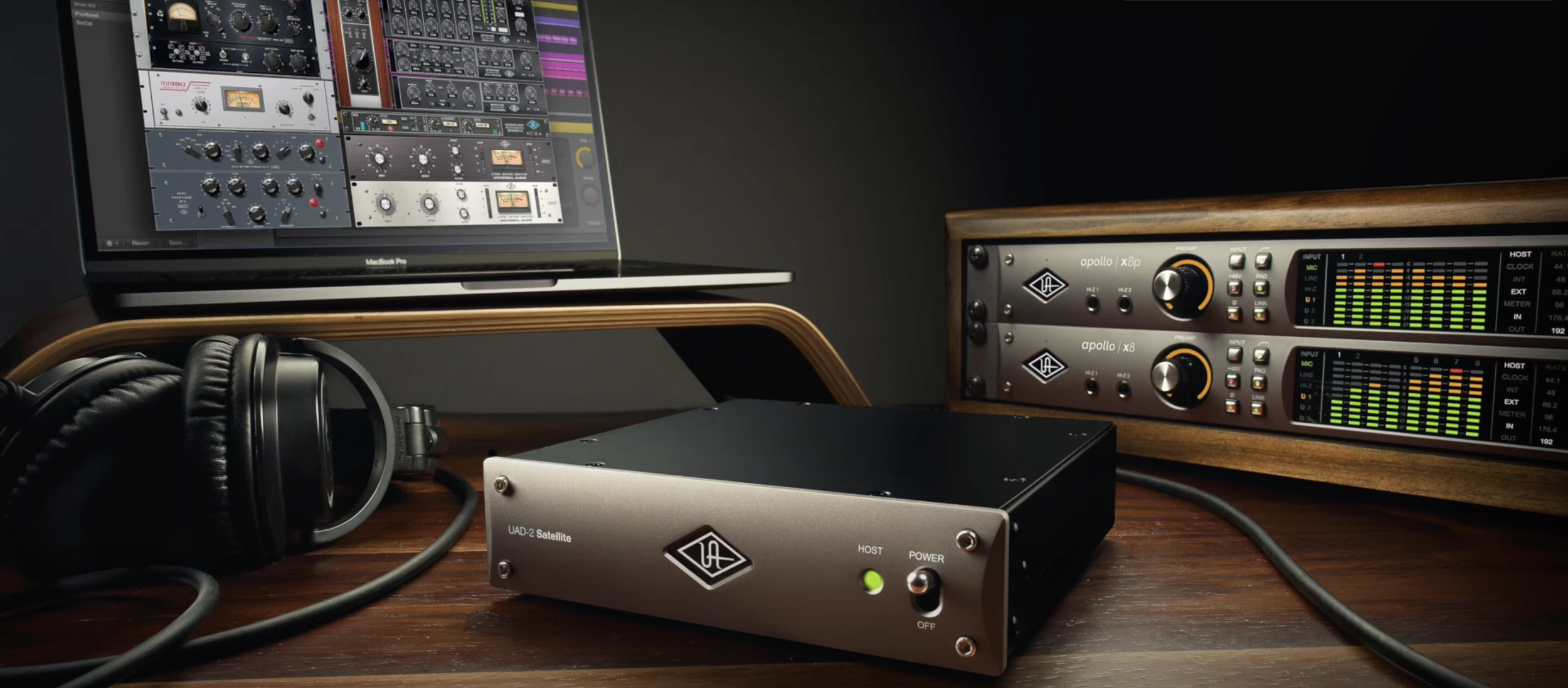
The UAD-2 Satellite can be integrated alongside UAD-2 PCIe DSP Accelerator cards and the UAD Apollo interface, for truly scalable mixing power.
4. You Can’t Afford Them
Let’s be honest: Universal Audio interfaces are expensive. Why spend £1,000 on an Apollo Twin when you could get a Focusrite Scarlett for £150 or an Audient iD14 for £300
Here’s the thing—those interfaces are great for their price, but the Apollo offers so much more. You get high-quality preamps that emulate iconic studio gear, world-class conversion, and unmatched flexibility. Apollo interfaces are also designed to grow with you, thanks to their ability to daisy-chain up to six UAD-2 devices.
Sure, there are standalone products that might outperform individual aspects of the Apollo. But no other interface combines all these features into one system. It’s an investment, but one that pays off as your studio evolves.
The goal here is not to criticise anyone’s choices but to provide helpful insights for those considering an Apollo or looking to maximise their existing setup. For further assistance, resources such as tutorials, comparisons, and audio examples are available below to help users make the most of their investment.
PURCHASING LINKS
BUY AN APOLLO INTERFACE
Sweetwater: https://imp.i114863.net/9m2W4
Thomann: https://thmn.to/thoprod/508045?offid=...
Amazon: https://amzn.to/2CRG4fW
BUY THE UAS-2 SATELLTE USB OCTO
Sweetwater: https://imp.i114863.net/PeZNX
Thomann: https://redir.love/thoprod/388028?offid=1&affid=707
BUY THE AUDIENT ID14
AUDIENT START RECORDING BUNDLE: https://youtu.be/Efq_rFa9rdc
Sweetwater: https://imp.i114863.net/DV0jo5
Thomann: https://redir.love/thoprod/510533?offid=1&affid=707
USEFUL VIDEOS
FULL UA Interface Range Comparison
Home to PRO Studio with Apollo
Printing with FX in Console & DSP Management

PROFESSIONAL MIXING & MASTERING SERVICES
Elevate your music with Ed Thorne's professional analogue mixing and mastering services. Claim your FREE sample master today! To find out more click here
