Is AI Mixing Viable in 2026?
AI has become a common tool in modern music production, particularly for mastering. This has led many artists to ask whether AI mixing is now a viable alternative to a professional mixing engineer.
In 2026, the answer is clear: AI can assist music mixing, but it cannot replace a human mixing engineer.
What AI Mixing Means in 2026?
AI mixing currently refers to AI-assisted audio plugins, not fully automated mixing services.
Tools such as iZotope Neutron can analyse audio, suggest EQ moves, identify frequency masking issues, and speed up workflow. These tools are widely used by professionals and are valuable time-savers.
However, they do not understand creative intent, musical context, or artistic direction. They offer technical suggestions, not creative judgement.
Why Fully Automated AI Mixing Still Doesn’t Exist
Unlike AI mastering platforms such as LANDR, there are no widely adopted, end-to-end AI mixing services in 2026.
That’s because mixing is inherently subjective. It requires:
Interpreting an artist’s vision
Making emotional and aesthetic decisions
Balancing genre expectations with originality
Responding intelligently to feedback and revisions
There is no single “correct” mix, which makes full automation extremely difficult.
The AI Mixing Revision Problem
One of the biggest limitations of AI mixing systems is revision handling.
A human mixing engineer refines a mix incrementally, preserving strong decisions and making targeted improvements. Most AI systems, by contrast, re-analyse and re-generate their output from scratch with each new prompt.
This often leads to:
Reduced consistency
Over-processing
Gradual loss of balance and clarity
The same issue is well-documented in AI image generation, where repeated re-drafts frequently degrade quality rather than improve it. Compounded by a thus-far total inability to keep the image the same despite being prompted to do so.
Mixing is a cumulative process. AI still struggles to treat it as one.
Why Human Mixing Engineers Are Still Essential
Many artists don’t communicate in technical terms like LUFS, compression ratios, or specific frequencies. They describe music using concepts such as:
Feel
Energy
Placement
Impact
A human mixing engineer translates that language into sound — deciding how a vocal should feel, when dynamics should breathe, and how the mix should support the song’s story.
AI recognises patterns. It does not understand meaning, intention, or context.
AI Mixing Tools vs Human Mixing Engineers
AI tools are most effective when used by experienced engineers, not instead of them.
They can:
Improve efficiency
Offer objective analysis
Reduce setup time
But without human oversight, AI-only mixes tend to sound technically acceptable yet emotionally generic.
The highest-quality mixes in 2026 are human-led, AI-assisted.
Is AI Mixing Worth Using in 2026?
AI mixing tools are useful production aids, but fully automated AI mixing is not yet a reliable replacement for professional mixing services.
For artists who care about emotion, identity, and longevity, a human mixing engineer remains essential.
Summary: AI Mixing in 2026
AI mixing tools are helpful but limited
Fully automated AI mixing services are still not viable
Revision workflows remain a major weakness
Artistic interpretation cannot be automated
When music matters, the mix needs more than an algorithm.
WHERE TO GET YOUR NEXT SONG MIXED BY A PRO
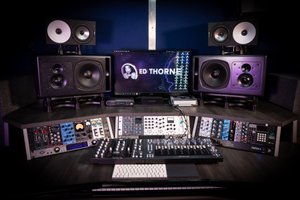
My name is Ed Thorne, and I am a musician and audio engineer with 30 years of professional experience creating, performing, mixing and mastering music. Please see my mixing page to find out more about my services and hear my work, and click here to book your mix now.